What Scotland Must Learn from the Nightclub Fire in Switzerland
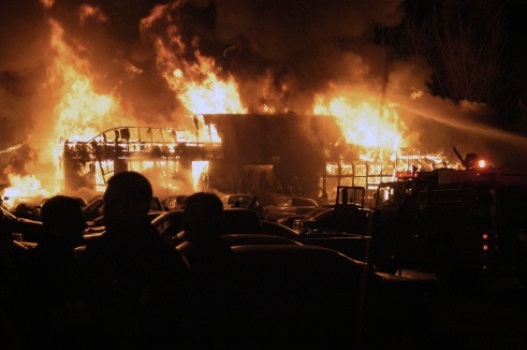
The 2003 Station Nightclub Fire in Rhode Island
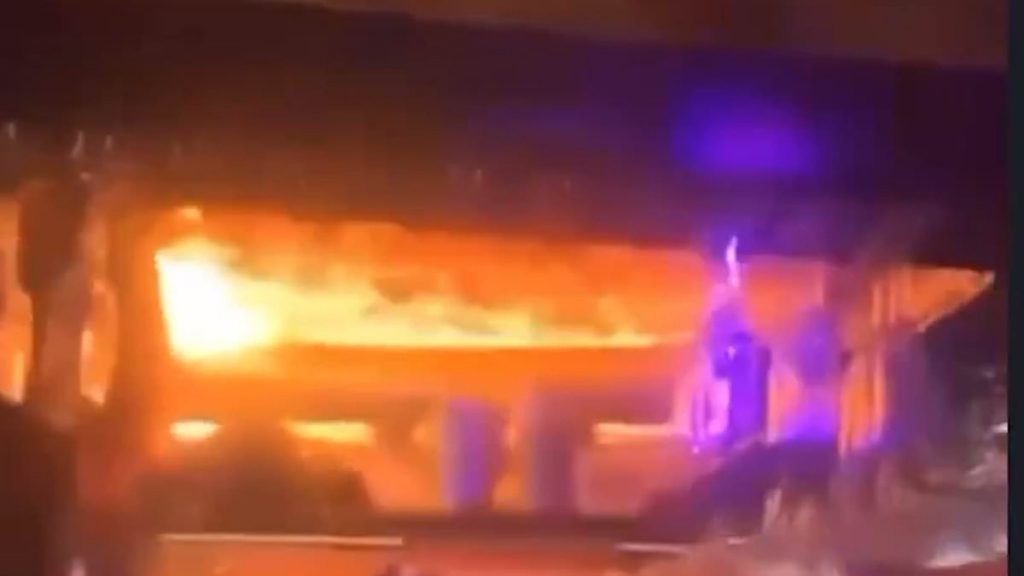
The 2026 Nightclub Fire in Switzerland
Professor Joe Goldblatt
When the Governor of the State of Rhode Island’s chief of staff left a message at my office I wondered what was the latest catastrophe the smallest state in the United States was facing.
As the former Dean of the Alan Shawn Feinstein Graduate School at Johnson & Wales I was used to receiving calls from media reporters as well as government officials seeking my views and expert knowledge regarding planned events, the field that I helped develop in higher education. However, I was not at all prepared for this call.
“100 young people have died while trying to exit a burning night club and we want to form an expert committee to recommend changes to prevent future disasters like this one.” The Governor’s chief of staff spoke in slow and somber terms as if to further convey to me the gravity of this tragedy.
The Station Nightclub Fire of 20 February 2003 not only killed 100 customers it injured 230 making it one of the deadliest nightclub fires in the history of the United States. The Governor requested that I recommend experts from all over the world to provide their experience and knowledge to help prevent future tragedies.
This is why when I learned this week of the catastrophe in the Le Constellation Bar in Crans – Montana, Switzerland, chills ran up my spine. A loud voice in the back of my brain announced over and over “Here we go again.”
In the Swiss disaster, similar to the Rhode Island event, indoor fireworks were the culprit. Therefore, I began to recall the changes the Goldblatt Report had recommended for Rhode Island and wondered why they were not applied in Switzerland, a state that is well known and well regarded for its safety standards.
After the many months of meetings, the Goldblatt Report recommended to the Rhode Island State Legislature that all venues must be adequately regularly inspected by the fire service and this would require greater investment in their resources. We also recommended that illuminated exit signs be posted at the top and bottom of each exit door.
In the case of The Station Nightclub Fire the majority of deaths and injuries occurred at the entrance (ingress) door. This is due to the fact that human beings are creatures of habit and generally in an emergency will first try and exit from the door where they entered the venue due to crowd crushing and stampede where many people we killed and injured before escaping.
When a room is filled with smoke the occupants also will most often drop to the floor to breath fresh air and in doing so will lose sight of the exit signs that are generally placed above the door frame. Therefore, by adding illuminated signs at the bottom more lives may be saved as more signs will be seen by guests.
We also recommended that every event that includes an audience of 100 or more patrons must have a fire service expert on site before, during, and after the event to continually look after fire safety. Only a member of the fire service has the authority to recommend and enforce changes to the event as required so having their expertise is essential in terms of preventing a dangerous situation. There will be a cost for this service but it will be far less than the millions paid by the insurance company for the disaster that occurred.
Finally, we recommended that in every live event there must be signs as well as an audio announcement stating “In the case of an emergency, please direct your attention to the nearest exit to where you are sitting or standing and calmly walk through this exit.”
Many of these type of fire procedures has been largely in place in Scotland since the Great Lafayette fire of 1911 at the Empire Palace (now Festival) Theatre. However, I often wonder to what extent these same procedures are applied to the local nightclubs found all over our city?
Although I do not regularly frequent nightclubs, I cannot recall a time when I saw illuminated exit signs at the bottom of the door or heard an announcement about exiting (egressing) the venue in case of an emergency.
Shortly after the Station Nightclub Fire my wife and I attended a performance of a play at a local theatre in Rhode Island. This time, before the curtain rose, the house lights dimmed to half, the audience fell silent, and to my surprise and relief a pre – recorded announcement used the exact words the Goldblatt Report had recommended be included prior to the start of any live performance. My wife squeezed my hand with pride and I hoped that this might finally be the start of safer venues for future audiences.
The recent similar tragic circumstance in Swtizerland has reminded me that in fact we are not now nor will we be ever completely certain that every event venue is safe. That is why the best memorial to those lost in Switzerland shall be the lessons we learn every time to help prevent future horrific tragedies in Scotland and beyond.
Professor Joe Goldblatt is Emeritus Professor of Planned Events at Queen Margaret University in Edinburgh, Scotland. His is the author, co – author, and editor of over 40 books in the field of Planned Events. His views are his own. For more information about his views visit www.joegoldblatt.scot