The Kiss That Changed the World
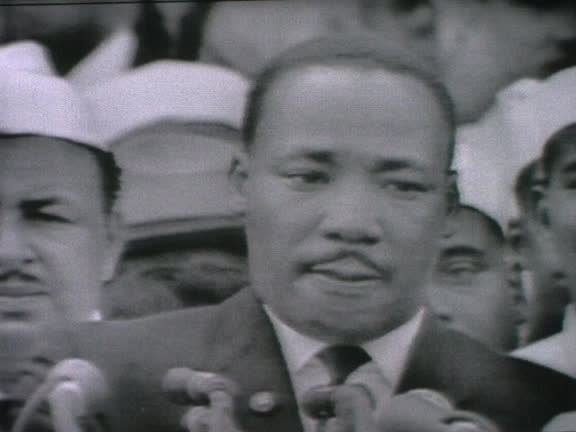
Reverend Dr Martin Luther King (1929 -1968) Speaking at the 1963 Civil Rights March on Washington
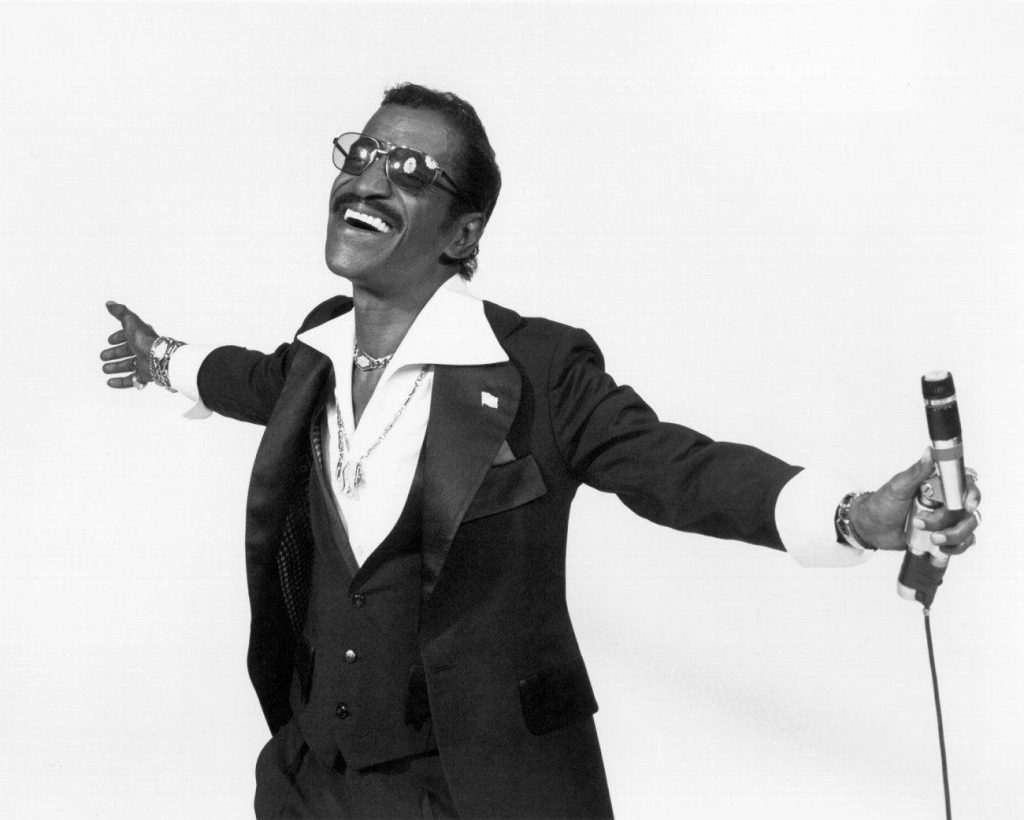
Legendary Entertainer Sammy Davis Jr (1925 – 1990)
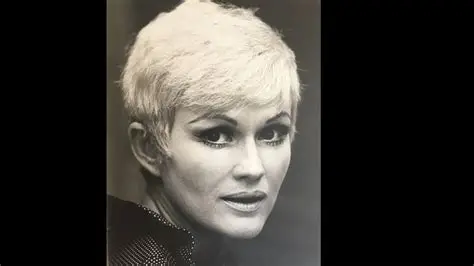
Broadway star Paula Wayne (1934 – 2018)
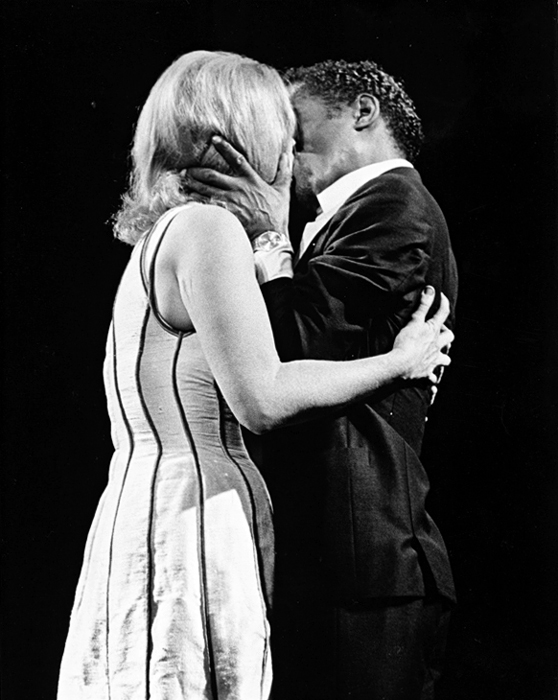
The Interracial Kiss that Changed the World (Scene from Golden Boy 1964)
Professor Joe Goldblatt
15 January 2025 is the birthday of the revered civil rights leader Reverend Dr Martin Luther King (1929 – 1968) and it is celebrated throughout the world. It was first established by an act of the U.S. Congress in 1983 and has been officially celebrted on the third Monday of each year since1986. The day is celebrated with parades and marches as well as religious and educational programmes.
In just three years the world shall celebrate Dr King’s centennial and plans are already underway to commemorate this historic event. Whilst these plans are being made, this year, the civil rights movement is celebrating the centennial of another hero who marched with Dr King and who helped break down many of the pre – existing concrete racial barriers within the United States.
Sammy Davis Jr. (1925 – 1990) was a beloved American entertainer whose boundless talent as a singer, dancer, and actor as well as his courageousness helped heal a country that had been deeply divided by race. When Davis married the Swedish actress May Britt he and his bride received death threats because of the rarity at that time of people of two races, black and white, falling in love and choosing to marry one another.
In 1964 a third and some would describe unsung heroine of the civil rights movement entered from stage right when the Broadway producer Hillard Elkins decided to produce a broadway musical entitled Golden Boy. The musical’s plot was one where a black boxer falls in love with a white woman and it climaxes with a dramatic embrace and kiss.
Elkins auditioned hundreds of female actors for over one year before deciding to cast a young woman named Paula Wayne (1934 – 2018) from Mountain View, Oklahoma to play the leading role opposite his star, Sammy Davis. Oklahoma was a state whre racial segrgation was very well known and practiced.
According to Miss Wayne, “When I auditioned, I was so nervous I could not sing. I fled the theatre to a bar across the street. A few minutes later I felt an arm on my shoulder and it was Sammy. He asked if there was something I found wrong with him! I told him that he was such a big star that I was nervous. He then gently led me back to the theatre and confidently said “We can do this.” And they did do it for over 600 performances on Broadway before going on a national tour.
She was immediately cast, however, she did not anticipate the racial strife that would soon follow. During the musical there is a climactic moment when Davis and Wayne embrace and kiss one another. Almost immediately angry protestors arrived at the stage door in Philadephia during their pre – broadway run and police protection was soon required for the leading lady.
The violence did not end in Philadelphia When the show finally opened on Broadway there was a huge photo of the famous kiss on the side of the theatre. Between shows Miss Wayne was having lunch at Sardi’s restaurant across the street from the theatre when she heard ‘rat – a – tat – tat’ and when she looked out the front window she witnessed a man with a machine gun at close range firing bullets at the photo. As she stepped through the doors of the restaurant to have better look she saw the gun pointed at her and a bullet ricocheted off the door resulting in a small piece of wood strking her face. The door saved her life.
Many years later when she was asked if she had perhaps anticipated that violence might be the outcome of the first interracial kiss on Broadway she said “Never! I never thought of it as interracial. I only thought of it as love and compassion for one another.”
In 1960’s America as Dr King was leading the struggle for civil rights there were many often unmentioned foot soldiers who were quietly but firmly working to change the views of U.S. citizens to better understand and embrace love, compassion, and foresake tolerance for acceptance of one another regarding or race, religion, sexual preference, or other misunderstandings.
Dr King, whose birthday we celebrate soon, may have been the commanding general for this U.S. civil rights movement and Sammy Davis Jr may have been one of lieutenants, however, I believe a young woman from Mountain View, Oklahoma was one of the individuals whose courage and integrity helped make this movement a partial success.
The success is only partial because there is still much work to be done as we are now experiencing record levels of anti – semitism, islamophobia, and homophobia throughout the world. Therefore, whilst we remember the talent and courage of Paula Wayne during the turbulent 1960’s of the race revolution in America, we must also commit to follow her example by refusing to see the differences among us and seeking to defeat our prejudices with much greater love and compassion for one another.
Professor Joe Goldblatt is Emeritus Professor of Planned Events at Queen Margret University in Edinburgh, Scotland.
His views are his own. For more information about his views please visit www.joegoldblatt.scot.