Festivals are Under Attack and How We Must Remain Resilient
Professor Joe Goldblatt
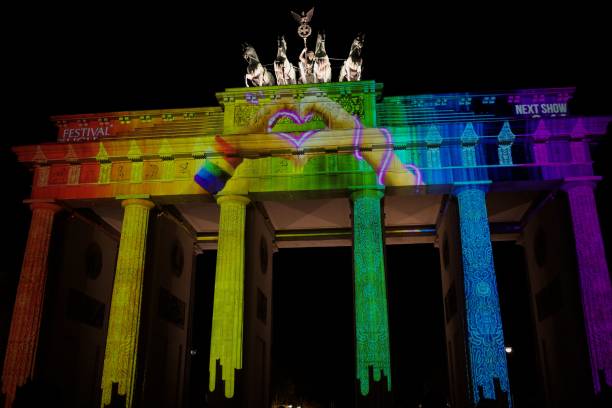
When former President Ronald Regan stood before Berlin, Germany’s Brandenburg Gate nearly 40 years ago in June 1987 he turned to the Russian people (then the Soviet Union) and shouted at their leader, “Mr Gorbachev, tear down this wall!” Soon, through the use of soft diplomacy by Reagan and Gorbachev who privately discussed their future hopes for peace for their grandchildren, Mr Gorbachev eventually did indeed tear down the Berlin Wall and reunited Germany.
As I watched with horror yet another major event in Germany disrupted by senseless violence, I began to wonder if now was the time for the global festival and events industry to work even more closely together to tear down the wall of violence at events.
The recent event I was watching occurred on Saturday 25 July 2026 in Berlin during the annual Berlin Pride Festival (better known as the Christopher Street Day Parade) that is an annual celebration of love and peace in Germany’s historic capital city. During the festival a German citizen described by police as an extremist drove his vehicle into a crowd and killed one woman and seriously injured 29 others.
This type of occurrence is the reason why risk assessment, management, and control is such an important element within the planning process of all events. It is also why this element has grown in importance in recent years due to extremist groups and mentally ill persons who wish to use public events as a megaphone to broadcast terror to the masses.
When planning your event of any size it is important that you remember that there is never a 100% guarantee you will prevent violence from occurring during your event. However, what you do before, during, and after your event can help mitigate the long – term reputational damage to your event property.
It is your responsibility to create a safety frame work to insure the safest possible conditions for your guests. The frame has four sides.
Before the event, it is important for you to conduct a thorough risk assessment and work closely with official agencies such as police, fire, ambulance services to insure you have considered as many vulnerabilities as possible and have planned for a disruption.
When I was an expert witness for a case in one of the USA western States I was surprised to learn that the event organisers did not plan for the potential of a mass casualty situation. As a result, when a team of horses ran through a crowd of thousands of people there was immediate panic and delays in providing first aid and transport of the victims. As a result of this poor planning, the case was settled for millions of dollars, the event organisers lost their business, and the event never reoccurred.
During every event the organiser must have adequate first aid on site or within proximity and must also liaise with local trauma centers to insure there is a seamless transfer of victims in case of injury or illness. For example, one of the events I produced was for a prestigious guest list of 100 Dean’s of medical schools. I recommended having a registered nurse (RN) on duty during the event given the advanced age of my all male guests. The client resisted due to cost and I paid for the nurse out of my profit from the event. After dinner, one of the guests had a massive heart attack and the quick action by the nurse and immediate transport to a trauma center saved his life. It also save the reputation of the client and my company. The client commended me by also reminding me that the loss of a senior Dean meant the loss of decades of medical knowledge, experience, and skill.
Finally, following an incident at your event it is important to pre – establish a media and family and friends reception areas and insure they are positioned far apart from one another. Dring the emotion of a major catastrophe it will only increase your troubles to have grieving or worried friends and family giving emotional interviews to media.
You should also set up and announce a regular schedule of updates that your incident commander will provide for news media. Make certain these briefings are delivered in front of a neutral background rather than in front of your event logo as these clips will be played over and over again on television and appear in many newspapers and on the internet.
Finally, it is important to prepare in advance an official statement, approved by your key stakeholders that will include your sympathy for those who were injured and their family and friends and then explain what you are doing to manage the incident. The person delivering this message should be your incident commander and he or she should be surrounded by other key officials from police, fire, and rescue services.
While we often hope for the best outcomes from all events we must also plan for the worst. Regrettably the worst appears to be on the rise world wide at events of all size and scale.
Following the catastrophic disaster in the USA after September 11, 2001 I was asked to give a talk in Sydney, Australia. I decided to within my talk about the growth in global events and invite all event planners to commit to creating a personal charter for each event to help promote peace and safety for the world through their actions.
Midway through my talk several demonstrators who were planted in the front row, rose up, shouted at me, and screamed “Americans are terrorists!” Then they through their anti – American leaflets at me and made a quick exit.
I remained silent until they had vacated the room and I then asked the audience if they were happy for me to continue and their loud applause confirmed what I had hoped would be their positive response.
After the talk the organiser who had invited me to fly 15,000 miles to give this talk apologised for the behaviour of the protestors. I told her that freedom of speech is a sacred human right, however, I was of course worried that their protests might have become violent. The organiser then told me that in fact she had planned for this disruption and security was standing by to protect the audience and to remove the protesters if required. I finally took a deep breath and relaxed realising that the organiser was actually practicing what I had been preaching.
In another international meeting protesters wearing Baklava style clothing suddenly abseiled from above the head table and unfurled a banner announcing their environmental messages. The organiser told me that he quickly conferred with security officials and they agreed to let the protesters make their announcement and to stand by to intervene if needed. No intervention was required as the protesters left the building and the meeting continued without further disruption. However, if security had intervened too soon the outcome may have been injurious to both the protesters and the audience.
Therefore, in addition to planning for ways to mitigate the outcome of these disasters I believe the global events industry must also stand firmly together to demonstrate through our improved risk assessment, planning, management, and control systems we shall not tolerate these disruptions and also that providing a safe and secure event environment is our foremost responsibility.
As one of my colleagues who produced events with thousands of people said to me one evening as the last car was pulling out of the parking lot from his event, “I ultimately judge my success by asking one simple question. Did everyone get home safely?”
Professor Joe Goldblatt is Emeritus Professor of Planned Events at Queen Margaret University in Edinburgh, Scotland. His views are his own. To learn more about his views visit www.joegoldblatt.scot.